
Hello Dear Reader,
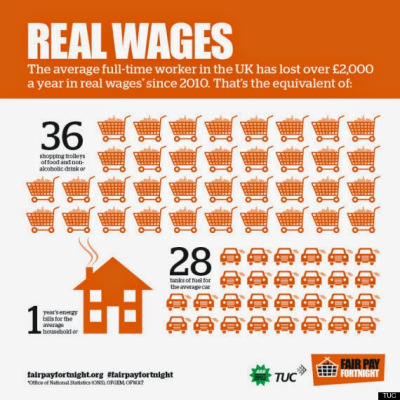
As always, I listened to the local news this morning. It was not a joke but real. One in three Cornish workers earn less than the living wage. That means that 1 in 3 Cornish workers earn less than £7.65 an hour. Whether you earn a surgeon’s salary or minimum wage, the cost of getting to work, the cost of water, the cost of food, the cost of clothing, the cost of energy is the same. Across my wonderful Cornwall, thousands of really decent hard working people are living in poverty due to low wages. Add debt to this amount and it’s no surprise that children are going hungry and families spent a long, damp and cold winter without any heating.
Also, across Cornwall, there is the blight of zero hours contracts. No one with a family can rely on work one day, no work the next and instead turn to benefits and the vicious cycle of poverty continues. I grew up in a low wage family and I know first hand the struggle to get dry or warm when you get wet or cold. I know what it feels like to have food rationed so it lasted the family all week. I know what it’s like to wear shoes too tight and knickers digging in because I had out grown them. I know what it’s like to be teased for being dirty as we had no hot water to wash and no heating to stand over a bowl of cold water. I know what it’s like to be cold and I know what it’s like to be hungry. Let me assure you, even if you can call it relative poverty as I still had a roof over my head and I still had food……………..living like that a child marks you for life. It leaves you with an inescapable fear of not having enough money to get by.
I live where housing is incredibly expensive, water has the highest bill in the UK and consumer choices are few and far between. Work is scarce and the bright, the ambitious and the entrepreneurial leave in their droves. To thrive here, you have to work your self to the bone, be ingenious and know how to make a pound do the work of a fiver.
There are ways and means of working your way out of poverty in the UK. I can’t speak for anyone else, just us and how we did it.
When Dearly Beloved and I got together we were both on minimum wage jobs. There lies the first solution, if all adults in the house are working, even if it’s just for minimum wage, then you can bring more money into the house. Dearly Beloved worked in a shop and I worked a carer in home for the elderly. He worked in the day and I worked night shifts. Neither of us were making the most of the O levels (now called GCSES - similar to a high school diploma) we left school with. We both actively sought out better employment. It took a trial but we kept going. We both wrote new CV’s and went out and actively looked for better paid jobs. DB found entry level employment in the civil service and I found a job as teaching assistant. It meant we went from minimum wage to a living wage and our household incomes increased by 25%. The difference to our family was phenomenal!
Whilst working as a teaching assistant, I went back to college in the evening and Dearly Beloved took a level 3 qualification (similar to a foundation degree) at work. Both cost us but it was worth the investment. I qualified to go to University and Dearly Beloved qualified to earn a professional salary. It had taken us three years to get that far. Whilst at university, I worked three jobs. In a call centre in the evenings, as a carer at the weekend and in a school a day a week. After four years, I qualified as a teacher and now after all our hard work, there were two professional salaries coming into the house. It took me five interviews to get my first teaching position and I’ve taught ever since and I’ve never looked back. Ever!
We did not get out of poverty over night. It was incredibly hard work and it cost us dearly, in more ways than just financially. There are many ways that families can do a little here and there to boost the family coffers and every single penny will add up. Look for extra work, even an evening in a chip shop will bring in money. Supermarkets are recruiting, albeit short hours and sometimes just evenings, but never be afraid to leave an office and go and work a three hours shift on a till somewhere. Tourist attractions and holiday resorts are recruiting now and a few hours of bar work in the evening will add up. You will pay basic rate tax and you will get that back in the next financial year with your P60. Even if the tax seems high, you will benefit. If you can, then rent a room as you can do this tax free! If you have a garage that you don’t use then rent it out as storage. If you have a driveway you don’t use then rent it out for parking. Look at any way possible to make some extra money. Look for local press adverts looking for host families for overseas students and being paid as a legal guardian for overseas children coming here to boarding school. As I said, when we increased our income by 25% it made such a difference.
Can you work your way out of poverty? What do you think Dear Reader? Share your story of your hard work and how it made a difference to your family or if it didn’t. As Rocky would say, it’s not all sunshine and roses.
I’m going away to count my blessings.
Until tomorrow,
Love Froogs xxxx
Advertisements

You can and we did. We have been homeless, car-less, jobless. And I really dont want to go back which is why I am frugal with my money even these days, when all i really need to worry about is the mortgage
LikeLike
Your blog is what spurred us on to get debt free, cut back and manage to live with four kids in tow. Your post about cleaning caravans and marking papers gave me hope and today we're debt free and chipping away at the mortgage. Thanks Froogs it was easier knowing your were there x
LikeLike
So much sage advice. I worked in some capacity since I was eight, and a solid work ethic can pay such dividends. Nice post.
LikeLike
“All good things cometh to him who waiteth, as long as while he waiteth, he worketh like hell.”
Can't remember where I saw this quote, but it rings true.
LikeLike
I think you can work your way out of poverty ,but like you say it doesn't happen overnight , sometimes you have to take risks too , i started my own business 6 months ago , it has been very hard initially but now its starting to look up and the harder i can work at it the faster i can pay of my debts and be debt free being frugal all the time in the meantime xx
LikeLike
We did too, but as previous have said, it does take time. I always had part time jobs but around the year 2000 the government did a re-jig of the benefit system and it meant that I was better off at home than working the 15 hours that I did, especially as we were supporting four school age children. I took a couple of years off and did some work at home, then once our eldest left home, then my son moved to his dad's house I returned to work part-time. I worked slightly more hours, then gradually took on more hours then went full time which is when it really started to pay off. Me working full-time with only two children at home was the springboard to our future. I too retrained as an accounting technician and eventually became self-employed. Like you Froogs, to this day I am still very frugal as it allows us to have more choice on what we spend our money on and what lifestyle we have.
LikeLike
Completely relate about the mark poverty leaves. I too grew up in a low wage household, and had some tough times as teenager too. Times like that never really go away.
When I met DP and we had a reliable income coming in, (I was a single parent by then) I worked shifts in a garage and did Open University courses until I had earned a degree. Halfway through, the mere fact I was doing it got me an interview to train to be a computer programmer, which got me a very good job which I loved and did for about 16 years, before starting our own business.
We don't have financial worries now, but I still think along frugal lines and have a fear of being poor again
LikeLike
Most people living in poverty will not be able to work their way out of it. The odds are stacked against them. There will be the odd success story but they are not the norm.
I feel for anyone struggling to get by. I in no way think every poor person is there as s result of stupidity. Anyone can fall into the trap of poverty. By the grace of God go I.
LikeLike
Nice post Froogs! I am not 100% convinced that people can always work their way out of poverty. This is especially hard when you have a single mom (or dad) with very young children who has no support network (friends/family). Even if they want to work a lot the need to care for the children takes precedence. But that may just be a timing issue. I do believe that the more you are out there looking for a job or hustling, the more you “luck” will find. While some will say it's about being in the right place at the right time, the right place is not at home sitting on the sofa.
~ Pru
LikeLike
Good work! You should be damned proud of yourselves - you have certainly worked your behinds off!
LikeLike
Whilst I agree that people can work their way out of poverty, if employers were to pay at lease a living wage, and the government were to enforce this, then it would be so much easier.
I find it galling that some companies can pay an absolute pittance, whilst raking in the profits so that the top bosses gan get their bonus and live a champagne lifestyle.
No-one should be in poverty, and no-one should have to work 2 or 3 (or even more) jobs to have an adequate standard of living.
More wages for the workers, and less bonuses for the fat cats!
LikeLike
Yes you can work out your way out of poverty! I have very strong opinions about this. In this country the opportunities you have here are amazing! I arrived to the UK 20 years ago with virtually no English and £30 in my pocket - my life savings. Before that I lived and worked for that magical $1 a day salary so I would say I have a good idea about poverty. I got a job as a carer with full board and £25 a week. From that I put myself through a college - English and secretarial skills, and saved money to go back home 2 years later. The fact that my employer allowed me to work to fit around my college and in exchange the college offered flexibility were for me unbelievable concepts! I worked with English people of my age who also got the same full board but their income was of course many times of mine. They moaned about lack of opportunities, money and so on. It did not pass me by that they would not think twice to hop in a car and drive 12 miles for a kebab in the evening and that they spent their weekends touring the local night clubs. 2 years later I went back home and with my qualifications and language I got a great job in one of the largest pharmaceutical companies which eventually brought me back to the UK and funnily enough to the same area where I first started. I met some of my former colleagues and they are still in those poorly paid jobs and still moaning how hard life is. In this country unless you are disabled or severely ill everybody has opportunities and the ability to make a better life for themselves, but it involves some hard choices and sacrifices. Education is one of the keys, and in particular one that provides you with vocational or professional qualifications. I am not in favor of studying just for the sake of it but on the other hand GCSEs only are not enough and you are more likely to struggle in life to earn living wage. I like your blog because it is showing how it can be done and I also admire your determination to share your experiences and knowledge with others.
LikeLike
Not all sunshine and roses indeed. I grew up in the 80's in a freezing cold house in the south of Ireland. My mum worked so hard to feed us, dress us and keep us warm. She had nothing to give us but her love and the results of her hard work. What she instilled in all of us is that hard work is essential to success, whatever success looks like to you. She told us that education was no burden and that we should knuckle down and do well, for ourselves, not for her. I was desperate to earn money so I worked in low paid jobs immediately after leaving school but always knew that I could and should do more….invest now for the future, invest in myself. I went to university at the age of 23, studying part time and working full time. I graduated when I was 32 and the mother of a toddler….9 years!!! And then I went straight on to post grad and to masters. I didn't finish my formal education until I was 40. As I qualified I moved into higher paid positions and that work ethic really paid off. Like you, Froogs, the life lessons taught by my mum are deeply ingrained; work hard, have integrity in everything you do, take pride in every accomplishment, never stop learning, love and laugh. These are the important things to pass on to our children. They work whether you are academic or creative or nurturing or practical in nature. I think with these attributes it is possible to improve every situation. I'm undecided as to whether every person can work their way out of poverty, sometimes it takes more than one generation but it has to start with someone….someone has to say “enough” and begin to turn it around for future generations. Start with how your kids think and feel about themselves and their future. Thanks Froogs, and Mum. xx
LikeLike
Completely agree - mployers should pay a living wage. I work full time, have a second job and take in students. I can do this because my kids are older, I am not a carer and I am healthy. If you are a single parent with young children or are disabled younmat not be able to work your way out of poverty even if you are willing to. As and when contracts need to be looked at too
Jane
Shoestringcottage.wordpress.com
LikeLike
A brilliant post.
I've always loved that quote 'the harder I work the more luck I seem to have' … it's so true.
LikeLike
I would add that having a mind and body which allows one to work hard all the time is a very big piece of luck. If you have it, use it; but recognise there will be plenty of others that can't get themselves out of poverty because they are disabled or unwell.
LikeLike
Yes I totally agree with this statement, I think it can be easy to assume it's just hard work and steel like determination to get you out of the poverty trap but like you say its a very big piece of luck if you have mind and body to do so. I've known people with physical disabilities, mental health problems and people in domestic violence situation who struggle. I'm not saying it's impossible but not always so easily achieved with just hard work. I also think if you're fortunate enough to have the ability to further your education and therefore get a better paid job then you're half way there, but perhaps some people don't feel they have this capability and therefore not as many opportunities to gain higher paid employment.
LikeLike
Theresa, if somebody wants to find a way out, they defintiely will.
If not, there will always be mroe excuses.
Success stories are not the norm because most people blame it on the govt, their life situation, the immigrant policy, just whatever to sit on it and do nothing about THEIR situation. I've heard innumerable sob stories from people who just want to complain and rant and do nothing even when there are ways to get out of poverty.
LikeLike
A single mom friend of mine with 2 kids could work outside of her home, because her work income will be far less than what she'll have to pay for her daycare. And there was no child support or family support for her either. But she did figure a way out - she offered full time daycare for 3 other kids and did babysitting in the evenings and weekends. She got her time well planned and organized that her kids and the daycare kids thrived and her family income increased as well.
LikeLike
What a geat article, FG!! I enjoyed reading it, all the while admiring all that hard work you put into it and the attitude that you have that has got you where you are, and will take you far! I'm more inspired by you everyday.
LikeLike
I would like to add to miss piggy's comment by saying that we human beings vary in our intellectual capacity and out executive functioning capacities that include the ability to self-motivate, plan and organise. When poor health be it physical and/or mental health is added to the mix, people really have a tough time maintaining their every day lives. When structural inequalities (access to education and employment) are added to the mix they are more often than not left far behind the rest of us. There are many, many reasons why people find themselves in poverty. As always I found your post inspiring for the likes of me (Mrs Average with average intelligence, motivation etc) but damming of those less fortunate.
LikeLike
I left school with four o levels, nothing more. If you can read and write and are numerate to gcse level, then you can challenge yourself to degree level. I really believe anyone can better themselves. I'm fuming that employers do not see the potential of people with any kind of disability . Education is free for adults to gcse level and their are concessions available for access courses to qualify for university. Degree costs are a disgrace and it took me ten years to pay for mine. Sorry if any one feels 'damned' but I work in education and believe that anyone can learn if they want to. I shook, cried and vomited before my Uni interview at 33 years old and sobbed with anxiety before eh very exam and wrote my dissy on beta blockers. I spent years not believing in myself and do understand that anyone can have self doubt and that anyone can get over it.
LikeLike
Away from the “bettering yourself” argument. I just want to say I am cornish born and bred and came from Avery poor background. My father was a proud hard working farm labourer,one of the poorest paid of all, BUT we were never dirty! Yes there may have only been cold water to wash in, in a freezing cold bathroom, but my mother washed us every day from top to toe! Sorry but I take offense at the poor a deity argument.
LikeLike
thank you for sharing your story. it does go to show. and there I was bemoaning my stuck situation. better get some work then innit.
LikeLike
This is such interesting reading and lots of food for thought. Whilst I agree in theory that everyone can learn if they want to, it's the wanting to that is sometimes the sticking point. My children go to a primary school with a very high percentage of socially and financially deprived families, generally speaking the level of expectation to do well academically is much lower and this does reflect in the dreaded SATS. The teachers do an incredible job to try and instill the motivation to learn but they really are up against it, having helped in classrooms I was shocked with the extent of social teaching and behaviour management they have to implement before trying to teach. Obviously teachers alone can't influence and encourage the wanting to learn, children also require good role models and home support. Obviously I'm not saying this is true of all children who live in these circumstances. If you're bought up believing that people don't expect much from you (regardless of background) this can become one of your core beliefs which is really hard to rethink in later life, In my experience it takes a lot of self awareness, soul searching, good teaching and counselling to actually realise that yes perhaps I'm good enough, clever enough, worthy enough of thinking I can do better academically, some people don't get these opportunities. I'm much encouraged by your own determination to over come self doubt and surprised by the level of anxiety you experienced. I would love to know how you did this and if you have any advice.
LikeLike
Hi Froogs, I didn't mean to undermine anything that you said in your post and wholeheartedly agree with so much of what you say. I work in welfare and have over 30 years experience in the field. I would like your readers to understand that some people are more vulnerable to poverty and not always able to get out of poverty. Recently I heard a story of a man with a disability who has a Masters degree and has been working as a clerk for a large government department. What a waste of potential. I am sure that as a teacher you would have come across students who struggle to pass through their year levels. Students who routinely forget to do homework or if they have done it forget to hand it in or are always losing things and forgetting things. Students who sometimes have formal diagnosis of autism spectrum disorder, dyslexia, ADD< ADHD, anxiety, depression and so forth. If a young person with impairment comes from a home where education is valued and there is money to engage appropriate supports then that young person can make it through the education system and go onto further education. If not, they can struggle to find their place in life and sometimes they give up, become chronically unemployed and stuck in the poverty cycle. Sadly, poverty does become entrenched and as you say somewhere along the line hopefully someone is able to say 'I've had enough of this, I can do better' . I hope my added comment has not offended you or your readers.
LikeLike
We went from a riches to rags situation when I was growing up. We owned our own home, had a car, had good holidays, plenty of food, clothes and toys. What we didn't realise was the level of debt our parents ran up to provide this lifestyle. My parents split up and the debt had to be paid off. We lost the lot and ended up in a damp, mouldy rented house (my sister was asthmatic so this wasn't good and our clothes became all mouldy). We had free school meals and I remember the shame of being lined up separately in front of everyone else to queue for free tickets. As I was a school prefect, I had to go in for lunch early and there wasn't any staff to issue the tickets for 15 minutes, so I funded my lunch out of my Saturday earnings until a member of staff noticed that I wasn't eating enough and demanded that free tickets were handed out discretely for the entire week on a Monday to avoid shame. We also got a grant for free school uniform.
Since meeting my husband, we've hit some hard times. We started off absolutely skint but determined to get ahead. We studied part time and moved round the UK taking promotions, working lots of overtime and benefiting from making profits on some of our houses. Unfortunately, my husband became very ill and had a long time off work, resulting in running up debt, losing his job and our home. However, we've come through all that after years of doing without, and are hopefully in a much stronger position. And I never ever want to get into debt again.
LikeLike
I don't think your comment offended, I think it's fantastic to be able to have a platform to have varying views, debate and for people to share their experiences. It can be difficult sometimes to get a message across in the exact manner in which it's intended I struggle with this at times, but better to take part than not. I'm also sure Froogs wouldn't publish anything that would cause offense. I'm sure we all agree this is fab blog, one which offers advice, debate, good ideas and excellent humour, this is reflected in her continuing success at the MAD blog awards. Long may she reign!
LikeLike
Just came across this older post again and wanted to mention my mom. She was born in the early 1940s (in the States) and was the youngest of a very large family. Her dad left when mom was less than a year old. There was a very large age spread amongst the siblings, so the older ones were already on their own when mom was born. The family got government support as grandma was an abandoned wife. Things were very lean. Grandma had heart problems and died a bit after when my mom graduated from high school. Mom had good enough grades for university, but she needed to work to help support her mom. She got secretarial job. When her mom died, one of her married sisters (who was childless) had mom come live with her. Mom did well at her job, had her own car (necessary as their was little public transport). She married my dad who was a factory worker turned office worker and I was raised in a modest, but decent middle class home.
LikeLike